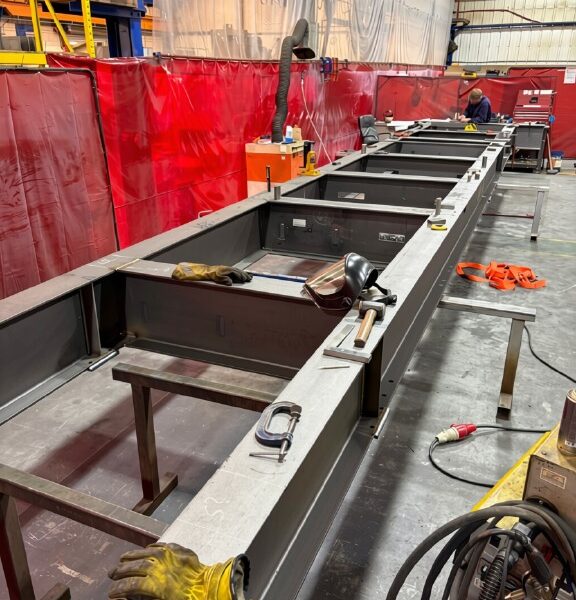
When a fabricated steel component forms part of a larger machine or assembly, the job involves more than producing a welded structure.
Material choice, welding sequence, machining allowances, mounting faces, bores, tolerances and inspection requirements can all affect whether the finished component performs as intended.
For businesses requiring steel fabrication in Birmingham, it is therefore important to consider the complete manufacturing process. A fabrication may appear straightforward initially, but problems with alignment, fit or dimensional accuracy can become costly once the component reaches final assembly.
At Glassworks Hounsell (GWH), we manufacture fabricated and precision-machined components from our Halesowen facility. Based on that experience, there are several practical points buyers should consider when planning an industrial steel fabrication project.
Start with the Finished Assembly
Before deciding how a fabrication should be manufactured, consider what it needs to connect to when it is finished.
A machine base, frame or equipment support may need accurately positioned mounting faces, holes or bores. If these features are important to final alignment, they should be identified before fabrication begins.
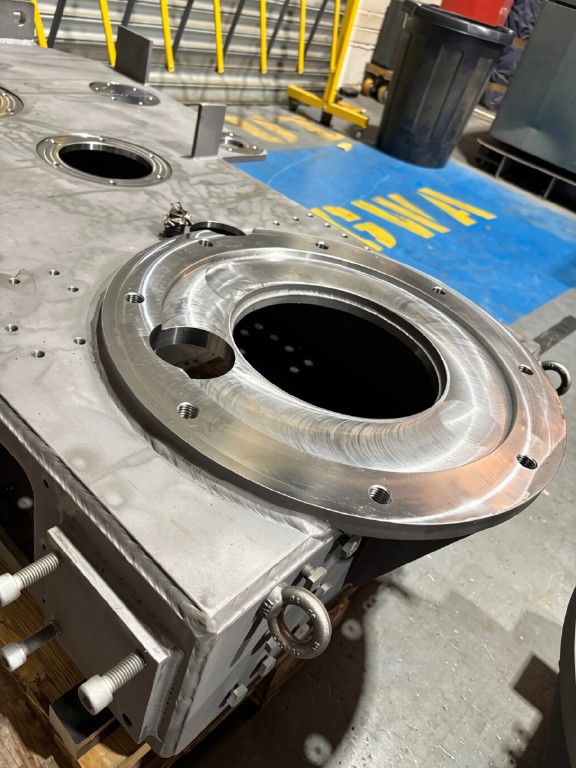
This is particularly relevant to precision steel fabrication, where welded construction and machined features must work together to meet the finished engineering specification.
Reviewing the complete drawing, including critical interfaces and tolerances, helps establish a suitable manufacturing sequence before material is cut.
Consider the Material and Welding Requirements
Material selection can influence how a component is welded, machined and used in service.
Mild steel is commonly used for machinery frames, supports and fabricated assemblies because it offers a practical combination of strength, weldability and machinability.
Stainless steel may be specified where corrosion resistance or operating conditions influence material choice. The manufacturing approach will depend on the grade, design and intended application.
Whichever material is selected, the welding process should be considered alongside the finished dimensional requirements.
Welding introduces heat into steel and can cause movement as the material heats and cools. The amount of distortion will depend on factors such as material thickness, joint design, fabrication size and welding sequence.
For larger structures, these effects become particularly important where critical dimensions must be maintained.
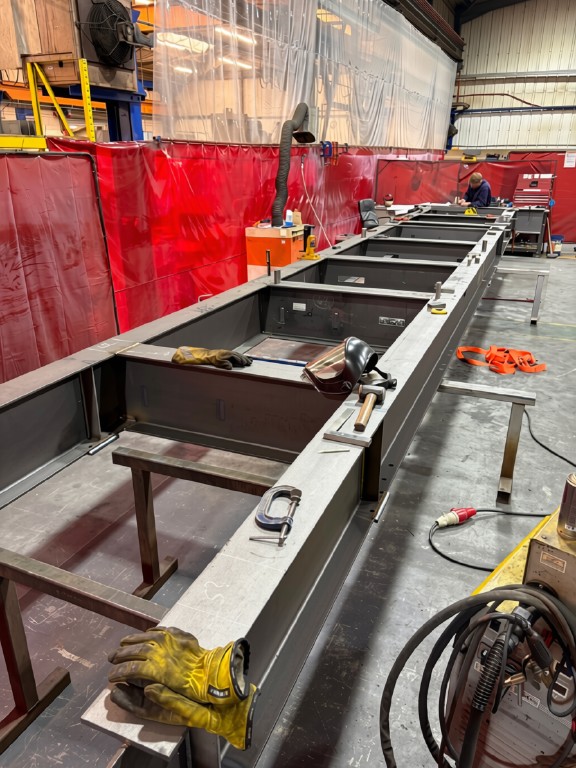
Decide Which Features Need Machining
Not every fabricated component requires CNC machining.
However, some features may need greater dimensional accuracy than fabrication alone can provide.
Typical examples include:
- Machine mounting faces
- Bearing or shaft locations
- Precision bores
- Datum surfaces
- Accurately positioned holes
- Mating faces between assemblies
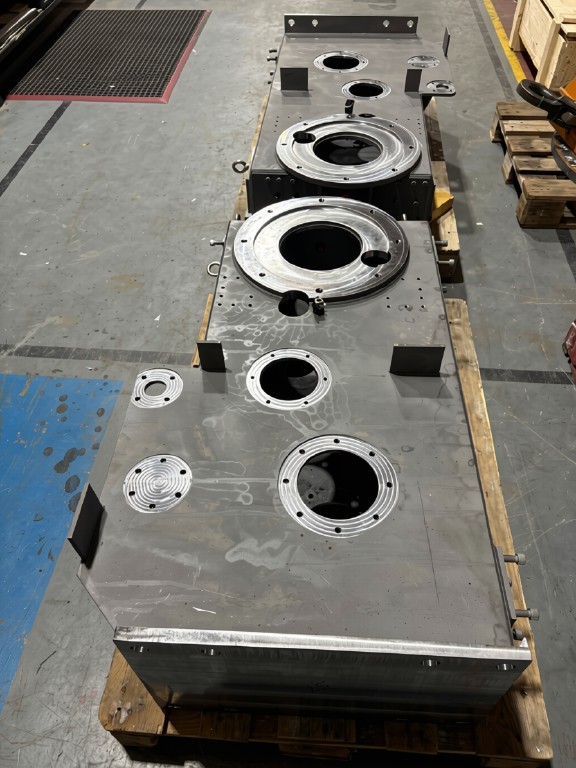
Where these features are critical, machining after fabrication may form part of the manufacturing process.
At GWH, our fabrication capability is supported by in-house CNC milling and CNC turning. This allows fabricated structures to be machined where the engineering specification requires accurate mounting faces, holes, bores or other interfaces.
Considering these requirements before fabrication starts can reduce the risk of discovering fit or alignment problems during final assembly.
Think About Size and Handling Early
Large fabrications introduce practical considerations that smaller components do not.
Overall dimensions and weight can affect how material is handled, how the structure is welded and whether the finished component can be accommodated by machining and inspection equipment.
We have heavy-duty steel fabrication capability for structures up to 13 metres long and 7.5 tonnes in weight.
However, size alone does not determine whether a project is suitable. Geometry, material, lifting requirements, machining operations and critical tolerances also need to be assessed.
Providing this information early allows the proposed manufacturing route to be reviewed before production begins.
Give Birmingham Steel Fabricators the Right Information
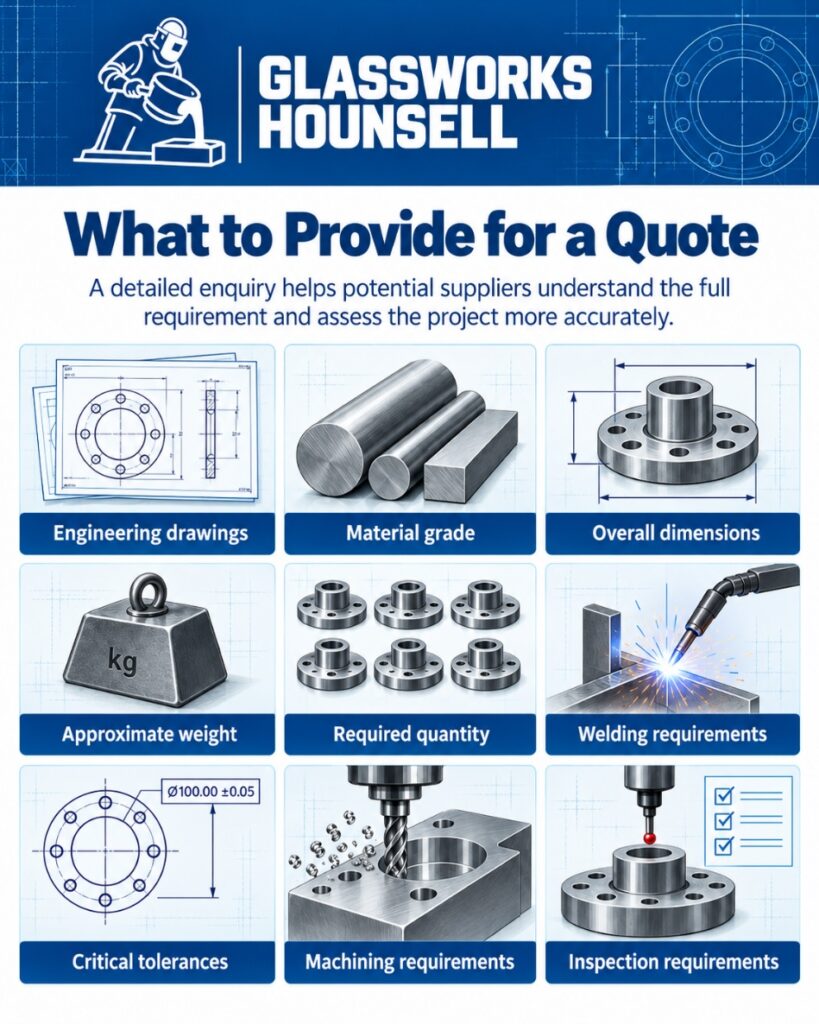
A detailed enquiry helps potential suppliers understand the full requirement and assess the project more accurately.
Where possible, provide:
- Engineering drawings
- Material grade
- Overall dimensions
- Approximate weight
- Required quantity
- Welding requirements
- Critical tolerances
- Machining requirements
- Inspection requirements
This gives Birmingham steel fabricators a clearer understanding of the finished component rather than an isolated welding requirement.
It can also identify potential manufacturing issues before material is ordered or work begins.
Define What Needs to Be Inspected
Inspection requirements should reflect the function of the finished component.
For some fabrications, straightforward dimensional checks may be sufficient. Where a structure forms part of a precision machine, more detailed measurement may be required to confirm the position of critical faces, holes or interfaces.
At GWH, our in-house inspection capability includes Coordinate Measuring Machine technology alongside fabrication and machining facilities.
For buyers, the important point is to identify which dimensions genuinely affect fit, alignment and performance so that appropriate checks can be planned into the manufacturing process.
Discuss Your Manufacturing Requirements Before Production
A successful fabrication project starts with understanding how the finished component will be used, not simply how it will be welded.
If your project involves a large, complex or technically demanding fabrication, send us your drawings, material specification, dimensions and details of any machining or inspection requirements.
We can review the manufacturing requirements and discuss whether our fabrication, machining and inspection capabilities are suitable for the component you need to produce.
Contact our team to discuss your project.
Frequently Asked Questions
Q: What information should I provide for a steel fabrication quotation?
A: Provide drawings, material specifications, dimensions, approximate weight, quantities and details of any machining, tolerance or inspection requirements.
Q: Does every steel fabrication need CNC machining?
A: No. Machining is normally required only where particular faces, bores, holes or interfaces need greater dimensional accuracy.
Q: Why can welding affect dimensional accuracy?
A: Heat introduced during welding can cause expansion, contraction and movement as the material cools, particularly on larger fabricated structures.
Q: Can large steel fabrications be machined after welding?
A: Yes. Large fabrications can be machined after welding where suitable equipment is available and the manufacturing sequence has been planned accordingly.
Q: What is precision steel fabrication?
A: Precision steel fabrication involves greater control of dimensions, interfaces or machined features where a fabricated component must fit accurately within a larger assembly.
Q: What materials are commonly used for industrial steel fabrication?
A: Mild steel and stainless steel are commonly used, although the appropriate material depends on the component design, operating environment and engineering requirements.