Choosing a precision engineering partner isn’t just a purchasing decision. For many businesses, it directly affects delivery performance, customer satisfaction, compliance risk, and the cost of rework. If you’re a decision-maker balancing quality, timelines, and accountability, working with a local precision engineering company in the West Midlands can give you a practical advantage, especially when projects involve tight tolerances, heavy components, or complex materials.
Below are the most common challenges we see in engineering procurement, and why local support can solve them.
Faster lead times and easier issue resolution
When a part or assembly is late, the impact rarely stays within one department. Production schedules slip, customer commitments are threatened, and teams spend time chasing updates rather than moving projects forward.
A local supplier shortens the distance between problem and solution. Site visits, design reviews, and progress checks are easier to arrange. If an issue arises, material deviation, unexpected machining constraints, or a late design change, you can resolve it quickly with the people actually making the component.
This matters even more for larger work. Moving heavy fabrications or oversized machined components across long distances adds cost, handling risk, and schedule uncertainty. A West Midlands precision engineering partner can reduce that friction and keep delivery more predictable.
Better quality control through closer collaboration
Quality issues are expensive because they tend to show up late, during assembly, commissioning, or even at your customer’s site. At that stage, the cost is not just remaking a part. It’s downtime, travel, reputation, and delayed revenue.
Local precision engineers make it easier to build quality in early. You can align on inspection methods, critical-to-quality dimensions, and documentation before work begins. When the engineering and quality teams can collaborate closely, you reduce ambiguity and avoid “assumptions” that lead to scrap or rework.
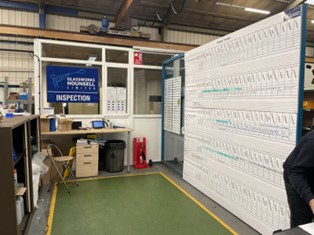
In-house inspection capability is also important. For example, GWH supports measurement and inspection using CMM and Mitutoyo equipment, with additional scanning capability hired as required. This helps customers who need repeatability, traceability, and confidence that parts will fit first time.
Reduced risk in your supply chain
Many businesses are still recovering from years of supply disruption. Longer supply lines mean more exposure to transport delays, customs processes, and limited visibility once work leaves the building. Even if a distant supplier is low-cost on paper, the risk premium can be high when your deadlines are fixed.
Local sourcing strengthens resilience. It improves communication, reduces transit complexity, and often gives you better transparency on progress. For projects where late delivery creates downstream penalties, that predictability can be worth more than a marginal price difference.
There’s also the risk of misalignment. Some suppliers chase volume and push everything through the same process. Others accept work outside their comfort zone, then struggle to deliver. A local partner that is clear about what it does best, such as heavy-duty machining, large components, and robust fabrication, reduces the chance of unpleasant surprises.
More capability for complex, heavy-duty work
Not all “precision engineering services” are the same. If your work involves large sections, heavy gauge materials, multi-operation machining, or difficult alloys, capability matters more than marketing.
In the West Midlands, you can access partners with deep experience across demanding sectors and materials. GWH, for instance, has the capability spanning CNC turning and CNC milling (including a large VMC) alongside fabrication and welding (MIG, TIG, ARC). It supports fabrications up to 13 metres long and 7.5 tonnes, which is a different class of engineering compared with small-part subcontracting.
That heavy-duty strength is often what decision-makers need when components must be both accurate and robust, such as automation structures, machinery frames, pillars and supports, or large machined housings.
Stronger engineering input, not just “build to print”
A common procurement frustration is suppliers who quote quickly but add little value when a design hits manufacturability constraints. Decision-makers don’t want drama mid-project, yet complex work often needs practical input on datum strategy, machining approach, or weld sequence.
Local precision engineers are easier to involve early. With CAD/CAM capability in-house (for example, SolidWorks, AutoCAD, and Fusion 360), design intent can be translated into manufacturable reality with fewer iterations. This can reduce lead time, avoid unnecessary tolerance stack-ups, and improve cost predictability.
A realistic balance of quality, cost, and delivery
Many buyers have experienced the “impossible promise”: lowest price, perfect quality, and fastest lead time, all at once. In reality, suppliers tend to deliver two out of three consistently.
A reliable partner is honest about trade-offs and backs it up with process control. As a decision-maker, transparency is valuable because it lets you plan with confidence, rather than firefighting late surprises.
If you’re reviewing suppliers for a current or upcoming project, share your drawings and key requirements and we’ll confirm the best route, expected lead time, and inspection approach, before you commit.